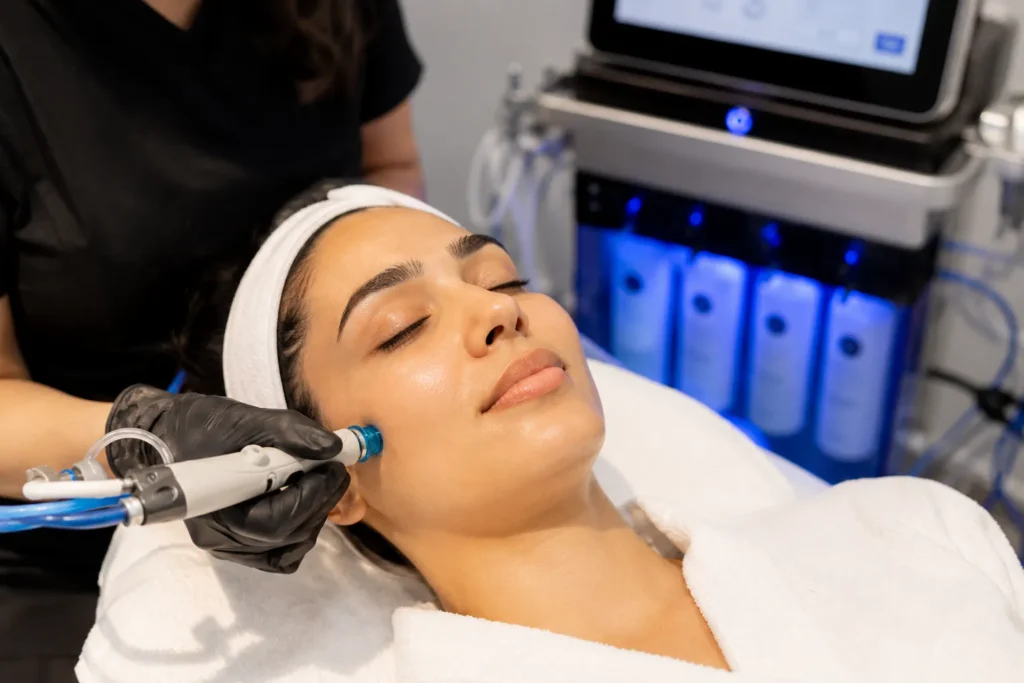
Your skin can look tired even when you’re getting enough sleep. Oil, pollution, sunscreen, makeup, dead skin cells and daily exposure can leave the face looking dull or congested. You may also notice rough texture, blackheads, dryness or uneven tone.
Hydrafacial in Andheri West is often considered by people who want a refreshed, cleaner and more hydrated-looking complexion without significant downtime. The treatment combines cleansing, exfoliation, extraction and hydration in one session.
But is it suitable for everyone? What actually happens during the procedure? How long do the results last? And is it better than a regular facial, cleanup or chemical peel?
This guide answers those questions so you can make an informed decision based on your skin type and concerns.
What Is a Hydrafacial?
A Hydrafacial is a non-invasive facial treatment designed to cleanse, exfoliate, extract impurities and hydrate the skin during one treatment session.
The branded Hydrafacial system uses patented Vortex-Fusion technology. It combines gentle suction with specialized tips and topical solutions to perform several steps during treatment.
Unlike a basic facial, the treatment follows a structured process rather than simply applying creams or massage products.
The exact treatment can vary according to your skin. Someone with oily, congested skin may need a different approach from someone with dry or sensitive skin.
That’s why a skin assessment before treatment matters.
Why Are People Choosing Hydrafacial for Their Skin Concerns?
Many people don’t have one single skin problem.
For example, you may have an oily T-zone but dry cheeks. You may have clogged pores along with dull skin. Someone else may have mild pigmentation and uneven texture.
A treatment that focuses on only one concern may not address the overall appearance of the skin.
Hydrafacial is commonly chosen because its multi-step approach can address several surface-level concerns in one appointment. It may help improve the appearance of:
- Dull-looking skin
- Dryness
- Surface buildup
- Congested pores
- Blackheads
- Uneven-looking texture
- Mild uneven tone
- Dehydrated skin
- Fine lines and roughness
The goal isn’t to change your natural skin. The aim is to support cleaner, smoother and more hydrated-looking skin.
What Happens During a Hydrafacial Procedure?
The exact steps depend on the clinic, equipment, products and your skin assessment.
A typical treatment involves cleansing and exfoliation, followed by extraction and hydration. The official Hydrafacial system describes its treatment around cleansing, exfoliation, extraction and hydration using Vortex-Fusion technology.
A professional may also adjust the treatment according to your concerns.
For instance, a person with congested skin may need more attention to pore cleansing. Someone with dry skin may need greater emphasis on hydration.
This personalised approach is important because stronger treatment isn’t automatically better treatment.
Step-by-Step Hydrafacial Procedure
1. Skin Assessment
The first step should be understanding your skin.
Your provider may look at oiliness, dryness, congestion, sensitivity, pigmentation, active breakouts and overall texture.
This helps determine whether Hydrafacial is appropriate and which approach should be used.
2. Cleansing
The skin is cleansed to remove surface oil, makeup, sunscreen and other impurities.
Clean skin also allows the following treatment steps to be performed more effectively.
3. Exfoliation
A gentle exfoliation step helps remove dead surface skin cells.
This can leave the skin feeling smoother and may improve the appearance of rough or dull skin.
4. Extraction
Gentle suction is used to help remove impurities from pores.
This step is particularly appealing to people concerned about blackheads and congestion. It should not be confused with aggressive manual squeezing at home.
5. Hydration
The skin is then treated with hydrating and nourishing solutions.
The aim is to leave the skin feeling comfortable and refreshed rather than stripped.
6. Optional Add-On Steps
Depending on the treatment plan, a clinic may offer additional options such as boosters or LED light therapy.
These shouldn’t be selected simply because they sound more advanced. The choice should be based on your skin’s needs.
Benefits of Hydrafacial
One reason the treatment is popular is that it combines several skin-care steps in one appointment.
1. Deep Cleansing
The treatment can help remove surface impurities and support cleaner-looking pores.
This can be useful when your skin feels heavy or congested after regular exposure to pollution, sunscreen or makeup.
2. Exfoliation
Removing accumulated dead skin cells can make the skin feel smoother.
It may also help skincare products spread more evenly across the skin.
3. Hydration
Dehydrated skin can appear dull, tight or rough.
Hydration-focused treatment may temporarily make the skin look more plump and fresh.
4. Smoother-Looking Texture
If roughness is mainly related to surface buildup and dehydration, improving exfoliation and hydration can make the skin appear smoother.
5. Fresher-Looking Complexion
Many people choose the treatment before an event because they want their skin to look more refreshed.
However, results vary from person to person.
6. Minimal Interruption to Your Day
A major attraction is that it generally doesn’t involve the same level of downtime associated with more intensive resurfacing procedures.
Still, your skin may experience temporary redness or sensitivity, depending on the treatment and your individual response.
Is Hydrafacial Good for Acne and Clogged Pores?
This is one of the most common questions.
Hydrafacial may be useful for surface congestion, excess oil and clogged pores, but it shouldn’t be treated as a complete medical treatment for every type of acne.
Acne can have several causes, including blocked pores, inflammation and hormonal factors. Treatment therefore needs to match the type and severity of acne.
The American Academy of Dermatology notes that acne treatment should be individualised. Depending on the patient, dermatologists may use topical medications, oral treatments and selected procedures.
If you have painful, inflamed or persistent acne, a proper skin assessment is more important than simply booking a facial.
Hydrafacial may sometimes complement a wider skincare plan, but it shouldn’t replace appropriate acne care.
Can Hydrafacial Help With Dry or Dull Skin?
It can be a suitable option for people whose main concern is dehydrated, tired-looking skin.
Dryness and dehydration aren’t exactly the same thing. Your skin can feel dry because it lacks oil, while dehydrated skin lacks water.
A hydration-focused facial may temporarily improve the feel and appearance of dehydrated skin. However, maintaining that result also depends on your everyday skincare routine.
A gentle cleanser, suitable moisturiser and daily broad-spectrum sunscreen are important parts of ongoing skin care.
Who Should Consider a Hydrafacial?
Hydrafacial may be worth discussing if you have:
- Dull-looking skin
- Mild surface congestion
- Blackheads
- Rough skin texture
- Dehydrated skin
- Dry or tired-looking skin
- Uneven-looking tone
- A desire for a refreshed complexion
- An upcoming event and want your skin to look smoother
It’s also popular among people who don’t want significant downtime.
However, suitability should always be assessed individually.
Who May Need to Avoid or Delay Treatment?
A facial treatment isn’t automatically suitable just because it is non-invasive.
You may need to postpone treatment if you have significant skin irritation, an active infection, open wounds, severe inflammation or another condition that could become irritated.
Tell your provider about:
- Current acne medications
- Recent chemical peels
- Recent laser treatments
- Skin allergies or sensitivities
- Active infections
- Recent cosmetic procedures
- Any prescribed skin medication
If you’re unsure, ask for a skin consultation first.
This is particularly important for people with acne or pigmentation. The American Academy of Dermatology recommends professional guidance before procedures such as peels or other resurfacing treatments, especially for people with darker skin tones who may be more prone to pigment changes after irritation.
Hydrafacial vs Regular Facial or Cleanup
A traditional facial or cleanup can vary greatly depending on the provider and products used.
A typical cleanup may focus on cleansing, exfoliation, steam and manual extraction. A facial may also include massage, masks and skincare products.
Hydrafacial uses a specific device-based process involving cleansing, exfoliation, extraction and hydration.
Neither option is automatically better for everyone.
If you mainly want relaxation, a traditional facial may suit you. If your priority is structured cleansing, exfoliation, extraction and hydration, Hydrafacial may be worth discussing.
Your skin concern should decide the treatment, not the popularity of the procedure.
Hydrafacial vs Chemical Peel
These treatments work differently.
A chemical peel uses a chemical solution to exfoliate the skin at a controlled depth. Different peels can address concerns such as acne, uneven pigmentation, dullness, rough texture and signs of ageing.
Hydrafacial is generally positioned as a gentler, multi-step cleansing and hydration treatment.
A peel may be more appropriate for certain pigmentation, acne or texture concerns. A Hydrafacial may be preferred when the goal is a refreshed, hydrated appearance with little disruption to daily activities.
The right choice depends on your skin condition and treatment goals.
What Results Can You Expect?
People often notice that their skin feels cleaner, softer and more hydrated after treatment.
The visible effect can include:
- A fresher-looking complexion
- Smoother-feeling skin
- Better surface hydration
- Less visible surface congestion
- A temporary healthy-looking glow
But it’s important to keep expectations realistic.
Hydrafacial isn’t a permanent solution for ageing, acne, pigmentation or scars. If a deeper skin concern is present, you may need a different treatment plan.
For example, acne scars may require treatments such as chemical peels, laser procedures, microneedling or other approaches depending on the type of scar.
How Long Do Hydrafacial Results Last?
There’s no single answer that applies to everyone.
Your skin type, daily skincare routine, sun exposure, oil production, lifestyle and the condition being treated can all influence how long your skin continues to look refreshed.
Some people schedule treatments periodically as part of their skincare routine. Others may choose one before an important occasion.
Rather than following a fixed schedule, ask your provider how frequently treatment makes sense for your skin.
How Often Should You Get a Hydrafacial?
Frequency should be personalised.
Someone with mild dryness may not need the same treatment schedule as someone with persistent congestion.
Your provider may consider:
- Skin type
- Skin sensitivity
- Main concern
- Current skincare products
- Previous procedures
- Response to the first treatment
More frequent treatment isn’t necessarily better. Your skin needs time to maintain its natural barrier.
Hydrafacial Aftercare
After treatment, keep your routine simple.
Do
- Use a gentle cleanser.
- Apply a suitable moisturiser.
- Wear broad-spectrum sunscreen.
- Follow any clinic-specific instructions.
- Keep your skin well hydrated.
Avoid
- Aggressive scrubbing.
- Picking or squeezing the skin.
- Immediately adding several strong active ingredients.
- Excessive sun exposure.
- Unnecessary exfoliation.
If your provider gives you specific aftercare instructions, follow those instructions rather than copying someone else’s routine.
Common Mistakes to Avoid
Choosing the Treatment Without a Skin Assessment
A popular facial isn’t necessarily the right facial for your skin.
Expecting Permanent Results
Hydration and surface improvements don’t stop the natural ageing process or completely prevent future congestion.
Using Too Many Active Products Afterwards
Your skin doesn’t need five new products after a treatment.
Keep the routine gentle unless your skincare professional advises otherwise.
Ignoring Sunscreen
Sun exposure can contribute to pigmentation and premature skin ageing. Daily sunscreen remains important after cosmetic skin treatments.
Treating Severe Acne Like a Facial Problem
Persistent acne may require medical assessment.
The AAD recommends individualised acne treatment because different types of acne can require different approaches.
Real-Life Example: When a Hydrafacial May Make Sense
Imagine someone working in Andheri West who spends long hours outdoors, commutes through traffic and wears sunscreen and makeup most days.
By the end of the week, the skin may feel oily around the nose and forehead but dry around the cheeks. Blackheads may also become more noticeable.
Instead of repeatedly squeezing the pores at home, the person could have the skin assessed and discuss whether a professional cleansing and hydration treatment is appropriate.
If the main concern is mild congestion and dullness, Hydrafacial may be considered.
If the person has painful acne or persistent pigmentation, however, a broader treatment plan may be more appropriate.
That’s why the consultation matters.
How to Choose a Skin Clinic in Andheri West
When comparing clinics, don’t look only at the treatment name or discount.
Look at the overall approach.
A good consultation should consider your skin type, current concerns, previous treatments and skincare routine.
You should also be able to ask:
- Who performs the treatment?
- Which device is being used?
- Is the treatment customised?
- What should I expect afterwards?
- Are there any reasons I should postpone treatment?
- What alternatives may be better for my concern?
- What results are realistic?
A professional clinic should be comfortable telling you when a particular treatment isn’t appropriate.
Dr Vritika Agrawal is a dynamic Entrepreneur, investor and the Founder and CEO of DERMACUTE AESTHETICS SKIN CLINIC.
Hydrafacial Treatment Cost: What Can Affect the Price?
People often search for Hydrafacial prices before booking.
The cost can vary between clinics because treatment protocols aren’t always identical.
Factors may include:
- Type of Hydrafacial treatment
- Products or serums used
- Treatment duration
- Optional boosters
- Additional technologies
- Provider expertise
- Number of sessions recommended
Be careful when comparing prices alone.
A lower price doesn’t necessarily mean better value if the treatment isn’t suitable for your skin.
Ask what the quoted treatment actually includes.
FAQs
1. Is Hydrafacial suitable for all skin types?
It may be suitable for many skin types, but every person is different. Sensitive, irritated or inflamed skin may require a modified approach or postponement.
2. Is Hydrafacial painful?
Most people describe the treatment as comfortable. You may feel gentle suction and movement across the skin. Individual experiences can vary.
3. Does Hydrafacial remove blackheads?
The extraction stage can help remove surface impurities and congestion. However, persistent blackheads may need an ongoing skincare plan.
4. Can I get Hydrafacial if I have acne?
It depends on the type and severity of acne. Mild congestion may be approached differently from inflamed or painful acne. Persistent acne should be professionally assessed.
5. Does Hydrafacial help with pigmentation?
It may improve the overall appearance of dull or uneven-looking skin, but pigmentation has many causes. Targeted treatment may be needed for persistent pigmentation or melasma.
6. Is there downtime after Hydrafacial?
Many people return to normal activities quickly, but temporary redness or sensitivity can occur. Your provider should explain what to expect based on your treatment.
7. Can I wear makeup after Hydrafacial?
Ask your provider when makeup is appropriate for your specific treatment. If your skin feels sensitive, giving it some time without heavy products may be more comfortable.
8. How often should I have a Hydrafacial?
There isn’t one schedule for everyone. Your skin type, concern and response to treatment should guide the frequency.
9. Is Hydrafacial better than a facial?
Not necessarily. They are different treatments. A Hydrafacial uses a structured device-based process, while traditional facials vary considerably.
10. Is Hydrafacial worth it?
It can be worthwhile if your goal is temporary improvement in hydration, cleansing, smoothness and overall skin appearance. If you have a medical skin concern, you may need a more targeted treatment.
Expert Tips Before Booking
Tip 1: Know Your Main Concern
Don’t simply say you want “glowing skin.”
Tell your provider whether your main issue is dryness, oiliness, blackheads, dullness, pigmentation or rough texture.
Tip 2: Bring Your Skincare List
Mention prescription creams, retinoids, acne medicines, exfoliating acids and recent procedures.
This information can affect whether treatment is appropriate.
Tip 3: Don’t Chase the Strongest Treatment
More exfoliation isn’t automatically better.
Healthy skin needs a functioning protective barrier.
Tip 4: Think Beyond One Appointment
A good skincare plan includes daily care.
Treatment can support your routine, but it doesn’t replace cleansing, moisturising and sun protection.
Tip 5: Treat Acne as Acne
If you’re dealing with repeated breakouts, don’t rely only on facials.
The AAD notes that effective acne care may involve different treatments depending on the type of acne and the individual patient.
When Should You Consider Acne Treatment Instead?
If your main concern is recurring pimples, painful breakouts, post-acne marks or acne scars, a dedicated Acne Treatment consultation may be more useful than repeatedly booking cosmetic facials.
Acne can involve inflammation, clogged pores and other factors. The treatment needs to target the actual problem.
For example, dermatologists may use topical retinoids, benzoyl peroxide, azelaic acid and other evidence-based options depending on the patient.
If you’re unsure whether your skin needs Hydrafacial or a targeted acne plan, start with an assessment.
Making the Right Choice for Your Skin
Hydrafacial can be a useful option when your goal is cleaner, smoother and more hydrated-looking skin with minimal interruption to your routine.
The treatment may suit people concerned about dullness, dryness, surface congestion, blackheads and uneven-looking texture. But it isn’t a universal solution for every skin condition.
Choosing the right treatment starts with understanding your skin rather than following trends.
If you’re comparing options for Hydrafacial in Andheri West, speak with the team at DERMACUTE AESTHETICS SKIN CLINIC about your specific skin concerns and expectations.
For persistent breakouts, clogged pores, acne marks or recurring acne, ask about Acne Treatment instead of assuming a facial is enough.
Ready to Understand What Your Skin Actually Needs?
Book a consultation with DERMACUTE AESTHETICS SKIN CLINIC, Andheri West, Mumbai and discuss your concerns with the team.