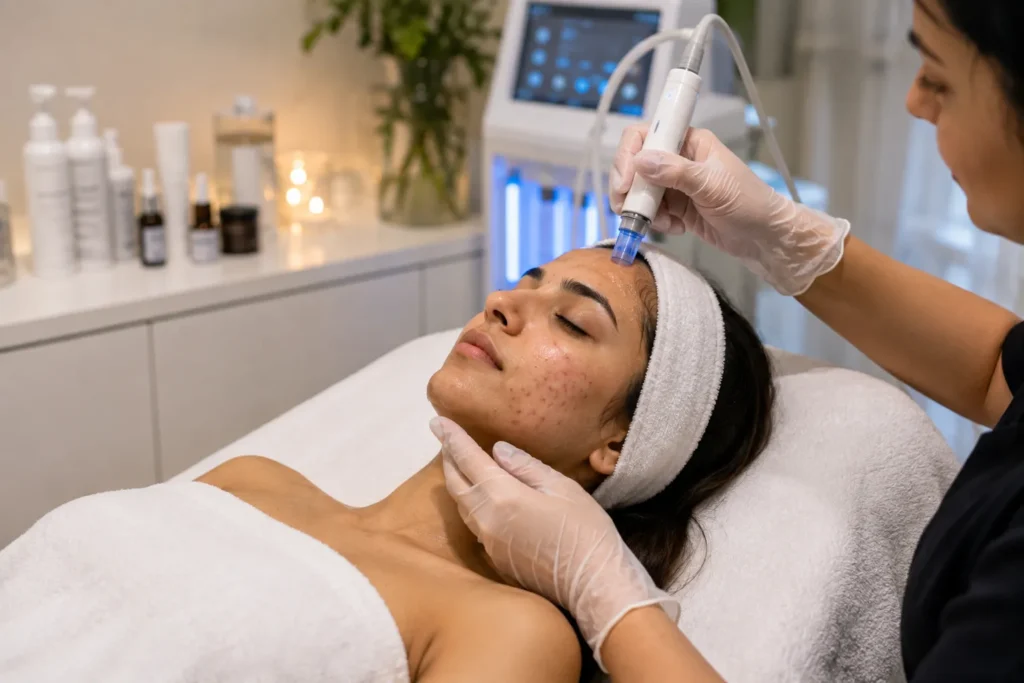
Acne is one of the most common skin concerns among teenagers and adults.
It can appear as pimples, blackheads, whiteheads, red bumps, pus-filled spots, or deeper painful lumps. Some people experience occasional breakouts, while others deal with acne for years.
If you’re searching for Acne Treatment in Andheri West, you’re likely looking for answers to practical questions: Why does acne keep coming back? Which treatment is suitable for your skin? Can acne marks fade? And how can you prevent new breakouts?
Acne develops when hair follicles become blocked by oil, dead skin cells, and other buildup. Inflammation can then develop inside the blocked follicle.
Dr Vritika Agrawal is a dynamic Entrepreneur, investor and the Founder and CEO of DERMACUTE AESTHETICS SKIN CLINIC.
The important thing to remember is simple: not every pimple needs the same treatment.
What Causes Pimples and Acne?
There isn’t always one single reason behind acne.
Several factors can work together. Understanding these factors can make it easier to choose the right skincare approach.
1. Excess Oil Production
Your skin naturally produces an oily substance called sebum.
Sebum helps keep your skin protected and moisturised. However, excess oil can contribute to blocked pores.
People with naturally oily skin may therefore be more prone to clogged pores and breakouts.
2. Dead Skin Cell Buildup
Your skin constantly sheds old cells.
Sometimes these cells don’t shed evenly. They can mix with oil and block the opening of a hair follicle.
This can result in blackheads and whiteheads.
3. Skin Inflammation
A blocked pore can become inflamed.
This can turn a small clogged pore into a red, swollen, or painful pimple.
When inflammation is deeper, the breakout may become more difficult to manage and may increase the risk of acne scarring.
4. Hormonal Changes
Hormones can influence oil production.
This is why some people notice breakouts during puberty, menstrual cycles, pregnancy, or other periods of hormonal change.
Hormonal acne often appears around the chin, jawline, lower cheeks, and neck.
5. Genetics
Your tendency to develop acne can also run in families.
If close family members struggled with persistent acne, you may have a higher tendency toward breakouts.
6. Skincare Products
Some heavy creams, oils, makeup products, and hair products can contribute to clogged pores in certain people.
This doesn’t mean every cosmetic product causes acne.
Instead, people with acne-prone skin may benefit from choosing lightweight and non-comedogenic products.
7. Stress and Lifestyle
Stress doesn’t automatically cause acne, but it can influence existing breakouts.
Poor sleep, high stress, irregular routines, and frequent touching of the face may also make acne management harder.
Different Types of Acne
Knowing what type of acne you have can help determine the right treatment approach.
Blackheads
Blackheads are open clogged pores.
Their dark colour isn’t simply dirt. The material inside the pore reacts with air and develops a darker appearance.
Whiteheads
Whiteheads are closed clogged pores.
They often appear as small, skin-coloured or whitish bumps.
Papules
Papules are small, raised, red bumps.
They are usually inflamed and can feel tender.
Pustules
Pustules are inflamed pimples containing pus.
These are the classic red spots with a white or yellow centre.
Nodules
Nodules are deeper and firmer than ordinary pimples.
They can be painful and may remain under the skin for longer.
Cystic Acne
Cystic acne involves deep, painful lesions.
This type of acne deserves early professional attention because it can increase the risk of permanent acne scars.
Acne Treatment in Andheri West: What Are Your Options?
The right Acne Treatment in Andheri West depends on the type, severity, location, duration, and behaviour of your acne.
A person with occasional blackheads may need a very different approach from someone with deep inflammatory breakouts.
Treatment may include skincare, topical medicines, prescription medicines, or selected skin procedures.
Topical Acne Treatments
Topical products are applied directly to the affected skin.
Depending on the individual’s skin and acne type, commonly used ingredients can include:
- Salicylic acid
- Benzoyl peroxide
- Azelaic acid
- Topical retinoids
- Prescription combinations
These ingredients work in different ways.
Some help clear clogged pores, some reduce inflammation, while others help control acne-causing changes within the follicle.
The important part is using the correct product at the correct frequency.
Using several strong ingredients at once can irritate the skin.
Prescription Treatment
Moderate or persistent acne may require prescription treatment.
Depending on the individual, treatment can include oral medicines or hormonal options.
Prescription treatment should always be selected after considering the person’s age, medical history, current medicines, pregnancy status where relevant, acne severity, and previous treatment response.
In-Clinic Skin Procedures
Some people may benefit from professionally selected procedures as part of their overall skin care plan.
The procedure should match the concern.
For example, treatment for active acne may differ from treatment for acne scars or pigmentation left after previous breakouts.
Procedures should therefore be selected after a proper skin assessment rather than simply choosing the most popular facial or treatment.
How an Acne Treatment Plan Usually Works
A good treatment plan isn’t about buying as many products as possible.
It starts with understanding your skin.
Step 1: Identify Your Main Concern
Are you dealing with:
- Frequent pimples?
- Blackheads?
- Whiteheads?
- Painful acne?
- Hormonal breakouts?
- Acne marks?
- Acne scars?
- Oily skin?
- Uneven skin texture?
The answer can change the treatment approach.
Step 2: Review Your Current Routine
Tell your skin care professional what you currently use.
This includes:
- Face wash
- Moisturiser
- Sunscreen
- Serums
- Exfoliants
- Acne creams
- Makeup
- Home remedies
This helps identify products that may be irritating your skin.
Step 3: Build a Simple Routine
A practical routine is easier to follow.
For many people, the foundation includes a gentle cleanser, suitable treatment, moisturiser, and sunscreen.
Additional products can be added when needed.
Step 4: Stay Consistent
Acne rarely disappears overnight.
Many treatments need several weeks before visible improvement becomes clear.
Changing products every few days can make it difficult to understand what’s working.
Step 5: Monitor Your Skin
Pay attention to:
- Number of new pimples
- Redness
- Oiliness
- Dryness
- Acne marks
- Irritation
- New areas of breakout
This information can help your treatment plan evolve.
Skincare Routine for Acne-Prone Skin
Your daily skincare routine can make a big difference.
It doesn’t need to be complicated.
Morning Routine
Start with a gentle cleanser.
Follow with a lightweight moisturiser if your skin needs it.
Finish with a broad-spectrum sunscreen.
Sunscreen is especially useful when you’re dealing with post-acne pigmentation, because sun exposure can make dark marks more noticeable.
Evening Routine
Cleanse gently to remove sunscreen, makeup, sweat, and daily buildup.
Apply your recommended acne treatment.
Use moisturiser if your skin feels dry or tight.
Don’t Over-Cleanse
Washing your face repeatedly won’t remove the underlying causes of acne.
It can instead make the skin dry and irritated.
Avoid Harsh Scrubbing
A rough scrub may feel like it’s cleaning your pores, but active acne can become more irritated after aggressive rubbing.
Use Non-Comedogenic Products
When choosing skincare or makeup, look for products labelled non-comedogenic when appropriate.
This can be particularly useful for people with frequent clogged pores.
Acne Treatment for Different Skin Concerns
Acne on Oily Skin
If your skin becomes shiny quickly, you may have higher sebum production.
The goal isn’t to remove every trace of oil.
Instead, use gentle cleansing and appropriate acne ingredients without damaging the skin barrier.
Acne on Sensitive Skin
Sensitive skin needs extra care.
Strong products used too frequently can lead to redness, burning, peeling, and discomfort.
A slower approach may be more suitable.
Hormonal Acne
If breakouts repeatedly appear around the jawline and chin, especially around predictable hormonal changes, hormonal factors may be involved.
A professional assessment can help determine whether hormonal treatment should be considered.
Adult Acne
Adult acne can be frustrating, particularly if you never had significant acne as a teenager.
Stress, hormones, skincare products, medications, and other factors may contribute.
Persistent adult acne deserves proper evaluation rather than being dismissed as something you’ll simply “grow out of.”
Acne on the Back and Chest
Acne can also develop on the body.
Sweating, friction, tight clothing, and certain hair or body products may contribute to breakouts.
Body acne often needs a routine designed specifically for the affected area.
How to Treat Acne Marks and Prevent Scars
Acne doesn’t always end when the pimple disappears.
You may be left with a dark or reddish mark.
These marks are not necessarily permanent scars.
Acne Marks
Post-acne pigmentation can remain after inflammation settles.
Sun protection and appropriate skincare can help manage these marks over time.
Acne Scars
True acne scars involve changes in skin texture.
They may appear as:
- Depressed scars
- Ice-pick scars
- Boxcar scars
- Rolling scars
- Raised scars
Treatment depends on the scar type.
If active acne is still appearing frequently, controlling new breakouts is usually an important first step.
Don’t Pick Your Pimples
This is one of the simplest ways to reduce unnecessary skin damage.
Squeezing or picking can push inflammation deeper and increase the risk of marks and scars.
Common Acne Mistakes to Avoid
Using Too Many Products
More products don’t automatically mean better skin.
A routine containing multiple acids, retinoids, scrubs, masks, and spot treatments can easily become irritating.
Changing Products Too Quickly
Give an appropriate treatment enough time to work.
Switching every few days can create more confusion.
Scrubbing Acne
Active acne doesn’t need aggressive physical exfoliation.
Gentle skincare is usually a better starting point.
Popping Pimples
It’s tempting.
But squeezing can worsen inflammation and increase the risk of marks.
Ignoring Sunscreen
If you have acne marks, skipping sunscreen can make pigmentation more noticeable.
Copying Someone Else’s Routine
Your friend’s skincare routine may be completely wrong for your skin.
Different acne types require different approaches.
Using Home Remedies Without Checking Ingredients
Lemon juice, toothpaste, baking soda, and other viral remedies can irritate the skin.
A simple evidence-based routine is usually a safer choice.
Can Diet and Lifestyle Affect Acne?
The relationship between diet and acne is more complicated than simply saying one food “causes” pimples.
Some people notice that certain foods appear to coincide with their breakouts.
Keeping a simple food and skin diary may help you notice personal patterns.
Other lifestyle habits can also support healthy skin.
Prioritise Sleep
Poor sleep can affect your overall wellbeing and may make skincare habits harder to maintain.
Manage Stress
Stress management doesn’t replace acne treatment, but activities such as walking, exercise, relaxation, and regular breaks can support overall wellbeing.
Stay Hydrated
Drink enough water throughout the day according to your body’s needs.
Keep Pillowcases Clean
Regularly changing pillowcases can be a sensible hygiene habit, particularly if you sweat heavily at night.
However, clean pillowcases alone won’t cure acne.
When Should You Seek Professional Skin Care?
You don’t have to wait until acne becomes severe.
Consider professional advice if:
- You have frequent breakouts.
- Pimples are painful or deep.
- Acne is leaving dark marks.
- You are developing scars.
- Your acne suddenly appears as an adult.
- Breakouts follow a hormonal pattern.
- Over-the-counter products aren’t helping.
- Your skin burns or peels after using acne products.
- Acne is affecting your confidence.
- You aren’t sure whether your bumps are actually acne.
Finding the Best Skin Care Clinic in Andheri should involve more than looking at treatment names.
Look for a clinic that takes time to understand your skin, explains your options clearly, and creates a practical treatment plan.
How Long Does Acne Treatment Take?
This is one of the most common questions.
The honest answer is: it depends.
Mild acne may improve sooner than deep inflammatory acne.
Acne that has been present for years may also require a longer management plan.
Many acne treatments take several weeks before noticeable improvement becomes clear.
You may first notice fewer new pimples. Later, the skin may gradually look calmer and more even.
Don’t increase the amount of treatment simply because you want faster results.
Too much of an active ingredient can cause irritation without speeding up improvement.
Real-Life Example: Why Every Acne Case Is Different
Imagine two people walking into a skin care clinic.
Both say, “I have acne.”
The first person has small blackheads around the nose and forehead. Their skin is oily but not inflamed.
The second person has painful breakouts around the jawline that return every month and leave dark marks.
Both have acne, but their treatment needs may be completely different.
The first person may need a routine focused on clogged pores and oil control.
The second may need an assessment of hormonal patterns, inflammation, acne severity, and pigmentation.
That’s why copying another person’s skincare routine isn’t always helpful.
Expert Skincare Tips for Clearer Skin
Keep It Simple
Start with the basics.
A gentle cleanser, appropriate acne treatment, moisturiser, and sunscreen can form a strong foundation.
Don’t Chase Instant Results
Healthy skin takes time.
Consistency matters more than constantly trying something new.
Treat Acne Early
If your acne is painful or repeatedly leaves marks, don’t ignore it for months.
Early management can help reduce the chance of prolonged inflammation and scarring.
Protect Your Skin Barrier
Redness, burning, excessive dryness, and peeling can indicate that your routine is too aggressive.
Your goal is not to make your skin feel “squeaky clean.”
Your goal is healthy, balanced skin.
Take Photos
If you’re following a treatment plan, take a clear photo every few weeks under similar lighting.
Daily mirror checks can make gradual changes difficult to notice.
Don’t Compare Your Skin With Social Media
Lighting, makeup, filters, camera settings, and editing can create unrealistic expectations.
Real skin has pores, texture, pigmentation, and occasional breakouts.
Your Next Step Toward Clearer, Healthier-Looking Skin
Acne can affect more than your skin.
Repeated breakouts can affect confidence, makeup choices, social situations, and the way you feel when looking in the mirror.
The good news is that acne can often be managed with the right combination of professional skin care, suitable products, consistent routine, and realistic expectations.
If you’re considering Acne Treatment in Andheri West, don’t choose a treatment simply because it’s trending online.
Start by understanding your acne type, skin condition, lifestyle, previous treatments, and risk of scarring.
The goal should be more than getting rid of today’s pimple.
It’s about reducing future breakouts, managing acne marks, protecting the skin barrier, and helping your skin look healthier over time.
Book an Acne Treatment Consultation at DERMACUTE
If recurring pimples, painful acne, acne marks, or uneven skin texture are bothering you, DERMACUTE AESTHETICS SKIN CLINIC can help you understand suitable treatment options.
Acne Treatment should be personalised according to your skin and the type of acne you’re experiencing.
📍 Location: Andheri West, Mumbai
📞 Book Appointment: +91 8268448149
🌐 Website: www.dermacute.in
📱 Instagram: @derma.cute
Book a consultation with DERMACUTE and take the first step toward a more consistent, practical skincare plan.
FAQs
What is the best treatment for acne?
There isn’t one treatment that works for everyone. The right option depends on the type, severity, skin sensitivity, age, and possible causes of your acne.
How can I get rid of pimples quickly?
Avoid squeezing them. A suitable acne treatment can help individual breakouts settle, but controlling recurring acne usually requires consistent care over several weeks.
Is acne caused by dirty skin?
No. Acne isn’t simply caused by poor hygiene. Excess oil, clogged pores, inflammation, hormones, and genetics can all contribute.
Can adults get acne?
Yes. Adult acne is common and can occur even if your teenage years were relatively clear.
What is hormonal acne?
Hormonal changes can influence oil production and breakouts. Hormonal acne commonly affects areas such as the chin, jawline, and lower face.
Can acne scars be removed?
Acne scars can often be improved, but the best treatment depends on the type, depth, and location of the scar.
How can I prevent acne scars?
Treat recurring acne early, avoid picking or squeezing pimples, and use appropriate sun protection.
Is skincare enough for severe acne?
Severe or deep acne may require prescription treatment. Professional assessment is particularly important when painful lesions or scarring are present.
How long does acne treatment take?
Many treatments require several weeks before clear improvement is visible. Consistency and regular review are important.
Can acne come back after treatment?
Yes. Some people remain prone to acne and may need a maintenance routine even after their skin becomes clearer.