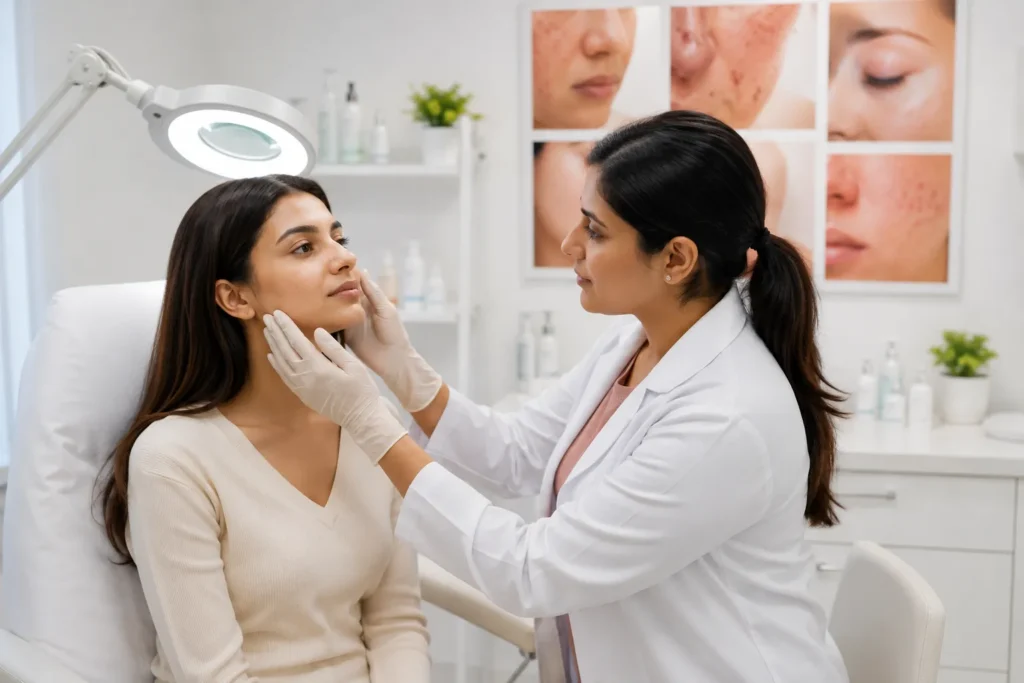
Why Do Common Skin Problems Keep Coming Back?
A pimple appears before an important meeting. A dark patch becomes more visible after a holiday. Your skin feels dry one week and oily the next.
Sound familiar?
Many people try a new cream whenever a skin problem appears. Sometimes it helps for a few days. Then the problem returns.
This often happens because the visible symptom isn’t always the real cause.
Acne can be linked to clogged pores, hormones, excess oil, inflammation or unsuitable skincare products. Pigmentation may become worse with regular sun exposure. Persistent redness can have several possible causes.
If you’re searching for a dermatologist in andheri west mumbai, you’re probably looking for more than another skincare product. You want to know what’s causing the problem and which treatment actually makes sense for your skin.
A proper consultation can help identify the concern, assess your skin type and create a treatment plan based on your needs.
What Does a Dermatologist Treat?
A dermatologist is a medical specialist who deals with conditions affecting the skin, hair and nails.
Skin concerns can range from mild problems, such as occasional breakouts, to conditions that need medical treatment.
Common reasons people seek professional help include:
- Acne and frequent breakouts
- Acne scars and post-acne marks
- Pigmentation and dark spots
- Melasma
- Sun tanning
- Uneven skin tone
- Dry or excessively oily skin
- Sensitive or irritated skin
- Fine lines and wrinkles
- Hair fall and thinning
- Dandruff and scalp concerns
- Skin infections
- Unwanted facial or body hair
- Skin texture problems
The important point is that different problems need different approaches.
A treatment that works well for pigmentation may not be suitable for active acne. Similarly, a procedure used for acne scars isn’t automatically the right choice for sensitive skin.
Common Skin Problems in Andheri West
Life in Mumbai can be tough on your skin.
Heat, humidity, dust, pollution, frequent sweating and strong sunlight can affect the skin barrier. Add long commutes, makeup, stress and irregular sleep, and it’s easy to understand why skin concerns become frustrating.
Here are some of the problems people commonly want help with.
1. Acne and Pimples
Acne isn’t limited to teenagers.
Adults can develop pimples on the face, jawline, forehead, chest and back. Some people experience occasional breakouts, while others deal with recurring acne for years.
Common triggers may include hormonal changes, excess oil, clogged pores, certain products and stress.
Treatment depends on the type and severity of acne.
A professional may recommend topical medicines, prescription treatment, chemical peels or selected procedures depending on the skin condition.
Trying to squeeze pimples can make things worse. It may increase inflammation and raise the risk of post-acne marks and scarring.
2. Acne Marks and Scars
There’s an important difference between an acne mark and an acne scar.
A dark or red spot left after a pimple may gradually fade. A true acne scar involves a change in the skin’s texture.
This distinction matters because treatment is different.
For pigmentation left after acne, a specialist may consider skincare, chemical peels or other targeted options.
For depressed or textured scars, treatments such as microneedling, fractional laser or combination approaches may be considered after examining the skin.
Don’t expect one sitting to completely change established scars. Skin improvement usually takes time.
3. Pigmentation and Dark Spots
Pigmentation is one of the most common cosmetic skin concerns.
You may notice dark patches around the cheeks, forehead, upper lip or jawline. Sometimes pigmentation appears after acne. In other cases, it may be associated with sun exposure or hormonal factors.
Melasma is another common concern. It often appears as darker patches on areas exposed to sunlight.
The first step is understanding what type of pigmentation you’re dealing with.
Treatment may involve:
- Sunscreen and sun protection
- Prescription or professional skincare
- Chemical peels
- Laser-based treatments in selected cases
- Procedures designed to improve skin tone
- A combination of treatments
The right approach depends on the cause, depth and type of pigmentation.
4. Tanning and Sun Damage
Mumbai’s sunlight can make tanning difficult to avoid.
You may notice your face, neck or arms becoming darker after regular outdoor exposure. Repeated UV exposure can also contribute to uneven pigmentation, premature skin ageing and changes in skin texture.
Sunscreen is important, but application matters.
Use enough product and reapply when you’re outdoors for extended periods. Hats, sunglasses and shade can provide additional protection.
If tanning has become persistent, professional treatment may help improve uneven tone. Your treatment should still include ongoing sun protection, or the problem may return.
Skin Care in Andheri West Mumbai: What Should Your Routine Include?
Good skin care in andheri west mumbai doesn’t need to involve ten different products.
A simple routine is often easier to follow and less likely to irritate your skin.
Morning Routine
Start with a gentle cleanser if your skin needs cleansing in the morning.
Follow with a moisturiser suited to your skin type. Finish with a broad-spectrum sunscreen.
If you have oily skin, choose a lightweight, non-comedogenic moisturiser. Dry skin may need a richer formula.
Evening Routine
Clean your face properly at night, especially if you’ve worn makeup or sunscreen.
Use any treatment product recommended for your particular concern. Finish with moisturiser.
Avoid changing several products at once. If your skin reacts, you won’t know which product caused the problem.
What About Serums?
Serums can be useful, but they’re not essential for everyone.
Vitamin C, niacinamide, retinoids and other active ingredients have different purposes. The right ingredient depends on your skin concern.
More products don’t necessarily mean better skin.
Dry, Sensitive and Irritated Skin
If your skin regularly burns, stings, becomes red or feels tight after applying products, your skin barrier may need attention.
Harsh cleansers, frequent exfoliation and using too many active ingredients can contribute to irritation.
A basic approach can help:
- Use a gentle cleanser.
- Apply a suitable moisturiser.
- Use sunscreen during the day.
- Reduce unnecessary active ingredients.
- Avoid scrubbing irritated skin.
If redness, itching, burning or irritation continues, don’t keep experimenting with products.
Persistent symptoms deserve a proper assessment.
Fine Lines and Early Skin Ageing
Fine lines are a normal part of ageing.
However, sun exposure, smoking, pollution and poor sun protection can contribute to visible skin ageing.
A sensible anti-ageing approach usually starts with daily sunscreen and good moisturisation.
Depending on your goals, a specialist may discuss options such as retinoid-based skincare, chemical peels, microneedling, laser treatments, skin boosters or other aesthetic procedures.
The goal shouldn’t be to make your face look completely different.
A good treatment plan should aim for healthier-looking skin while keeping your natural appearance.
Hair and Scalp Problems
Dermatology isn’t limited to facial skin.
Hair fall, thinning, dandruff, scalp itching and excessive hair shedding can also require professional evaluation.
Hair loss can have several possible causes. Nutritional factors, hormonal changes, stress, genetics, scalp conditions and certain medical conditions can play a role.
That’s why copying someone else’s hair treatment isn’t always a good idea.
A specialist may examine your scalp and hair pattern before recommending treatment.
How to Choose the Right Skin Care Clinic
When you’re searching for a skin care clinic in andheri west, don’t choose only because a clinic offers the largest number of treatments.
Look at the quality of the consultation.
A good clinic should first understand your concern instead of immediately suggesting a procedure.
Consider these factors:
- Is your skin properly examined?
- Are the treatment options explained clearly?
- Are possible side effects discussed?
- Is aftercare explained?
- Are realistic results discussed?
- Does the clinic avoid unnecessary procedures?
- Are treatment recommendations personalised?
You should feel comfortable asking questions.
If you’re unsure about a treatment, ask why it’s being recommended and what alternatives are available.
What Happens During a Skin Consultation?
Many people feel nervous before their first appointment because they don’t know what to expect.
A typical consultation starts with questions about your skin concern and how long you’ve had it.
The specialist may ask about:
- Previous treatments
- Current skincare products
- Allergies or sensitivities
- Acne history
- Sun exposure
- Lifestyle factors
- Hair or scalp symptoms
- Changes you’ve noticed recently
Your skin is then examined.
Depending on the concern, the specialist may suggest skincare, medication, a procedure or further evaluation.
You don’t necessarily need a treatment on your first visit.
Sometimes the most useful first step is simply understanding what’s happening to your skin.
Treatment Options for Common Skin Concerns
There isn’t one universal skin treatment.
The best option depends on your skin, the condition and your treatment goals.
Chemical Peels
Chemical peels use selected chemical solutions to exfoliate the outer layers of the skin.
They may be used for certain cases of acne, pigmentation, uneven tone and dull-looking skin.
The type and strength of the peel should be selected carefully.
Microneedling
Microneedling creates controlled micro-injuries in the skin.
This process can encourage collagen production and may help improve certain types of acne scars and uneven texture.
It isn’t suitable for every skin condition.
Laser Treatments
Different lasers are designed for different concerns.
Some may be used for pigmentation, unwanted hair, acne scars, redness or skin rejuvenation.
Laser treatment should be selected according to the concern and skin type.
HydraFacial and Medi-Facial Treatments
These treatments are often chosen by people looking for deep cleansing, hydration and improved skin appearance.
They may be useful for certain cosmetic concerns, but they shouldn’t replace medical treatment when you have an underlying skin condition.
Prescription Skincare
Some skin problems respond well to medically guided topical treatment.
For example, acne and pigmentation may require specific active ingredients or prescription medicines.
Using strong products without guidance can sometimes cause irritation or worsen pigmentation.
Common Skincare Mistakes to Avoid
Changing Products Too Often
Give your routine time to work unless you’re experiencing irritation.
Switching products every few days makes it difficult to understand what actually helps.
Scrubbing Aggressively
Scrubbing harder doesn’t mean cleaner skin.
Rough scrubs can irritate the skin and may worsen inflammation.
Ignoring Sunscreen
If you’re treating pigmentation but regularly skip sun protection, you’re working against your own treatment.
Copying Someone Else’s Routine
Your friend’s skincare routine may be completely wrong for your skin.
Skin type, age, sensitivity and the underlying problem all matter.
Picking Pimples
This is one of the easiest mistakes to make.
Picking can increase inflammation and leave marks behind.
Using Too Many Active Ingredients
Retinoids, acids and other active ingredients can be helpful when used correctly.
Using several strong products together may cause dryness, burning and irritation.
Real-Life Example: When More Products Aren’t the Answer
Imagine someone with oily skin, frequent pimples and dark marks.
They buy a face wash for acne, a strong exfoliating serum, a scrub and a pigmentation cream.
For the first week, the skin feels cleaner. Then it becomes irritated. New pimples appear, and the dark marks look more noticeable.
The problem isn’t necessarily that the products are useless.
The routine may simply be too aggressive.
A professional assessment could identify the main issue and reduce the routine to a few targeted steps.
That’s often a better starting point than adding another product.
A Simple Step-by-Step Guide to Better Skin
Step 1: Identify the Main Problem
Don’t try to treat acne, pigmentation, dryness and ageing all at once.
Start with the concern that bothers you most.
Step 2: Simplify Your Routine
Use a cleanser, moisturiser and sunscreen as your basic foundation.
Add treatment products only when there’s a clear reason.
Step 3: Track Changes
Take a photo every few weeks under similar lighting.
Daily mirror checks can make gradual improvement difficult to notice.
Step 4: Protect Your Skin From the Sun
Use sunscreen consistently, especially when you’re spending time outdoors.
Step 5: Get Professional Advice for Persistent Problems
If a problem keeps returning despite basic care, it’s worth getting an expert opinion.
When Should You See a Skin Specialist?
Not every pimple requires a consultation.
But professional advice can be useful when:
- Acne keeps returning
- Pimples are painful or deep
- Acne is leaving scars
- Pigmentation keeps becoming darker
- Skin irritation doesn’t settle
- You have persistent itching or redness
- Hair fall continues for several weeks
- Your scalp is constantly itchy or flaky
- A mole or skin growth changes in appearance
- Home skincare isn’t improving the problem
Early assessment can sometimes prevent a minor concern from becoming a long-term one.
Expert Tips for Healthier Skin
Keep your routine simple enough to follow every day.
Don’t chase every new skincare trend. Your skin doesn’t know whether a product is popular on social media.
Patch-test new products when appropriate, especially if your skin is sensitive.
Wear sunscreen consistently and don’t forget your neck.
Avoid picking or squeezing pimples.
If you’re using several active ingredients, introduce them carefully rather than starting everything together.
Most importantly, pay attention to changes in your skin. A new or persistent concern deserves proper attention rather than endless trial and error.
How to Find Skin Care in Andheri West Mumbai That Fits Your Needs
Finding the right treatment isn’t just about choosing the most advanced procedure.
You need an approach that matches your skin and your actual concern.
If you’re comparing clinics, look for clear consultations, personalised treatment plans and realistic discussions about results.
Ask questions before starting a procedure.
You should understand what the treatment is intended to do, how many sessions may be needed, what recovery involves and how you should care for your skin afterwards.
Take the Right Step for Your Skin
Healthy skin doesn’t come from using the most expensive products or following every skincare trend.
It starts with understanding your skin and treating the actual problem.
Acne, pigmentation, tanning, sensitive skin, acne scars, hair fall and early ageing can all require different approaches. What works for one person may not work for another.
If you’re searching for a dermatologist in andheri west mumbai, focus on getting a proper assessment before choosing a treatment. A personalised plan can help you avoid unnecessary products and procedures.
For anyone looking for skin care in andheri west mumbai, the goal should be simple: healthier skin, realistic expectations and a routine you can actually maintain.
Frequently Asked Questions
Is a dermatologist only for serious skin problems?
No. Dermatologists also help with common concerns such as acne, pigmentation, dandruff, hair fall, tanning and skin ageing.
You don’t need to wait until a problem becomes severe.
How do I know which facial treatment is right for me?
The right treatment depends on your skin condition and goal.
A consultation can help determine whether a facial, peel, microneedling, laser or simple skincare routine is appropriate.
Can acne marks disappear completely?
Some acne marks fade naturally over time.
Treatment may help speed improvement. True acne scars can be more difficult and often require procedures or combination treatment.
Is sunscreen necessary if I stay indoors?
UV exposure through windows can still occur. More importantly, many people underestimate how much outdoor exposure they receive during commuting and daily activities.
Daily sunscreen is generally a useful part of a skincare routine.
How often should I change my skincare products?
Don’t change products simply because you haven’t seen immediate results.
Some treatments need several weeks to show meaningful improvement. If you experience irritation, however, stop the suspected product and seek professional advice if needed.
Can oily skin still need moisturiser?
Yes.
Oily skin can still become dehydrated. A lightweight, suitable moisturiser can support the skin barrier without making the skin feel excessively greasy.
Are chemical peels safe for everyone?
No treatment is suitable for everyone.
The peel type, concentration, skin condition and medical history should be considered before treatment.
Can skincare remove deep acne scars?
Skincare can help improve overall skin quality and some marks.
Deep or textured scars often need professional procedures such as microneedling, laser treatment or other scar-focused approaches.
How long does a skin treatment take to show results?
It depends on the condition and treatment.
Some improvements may be noticeable quickly, while pigmentation, acne scars and ageing concerns often need multiple sessions or several weeks of consistent care.