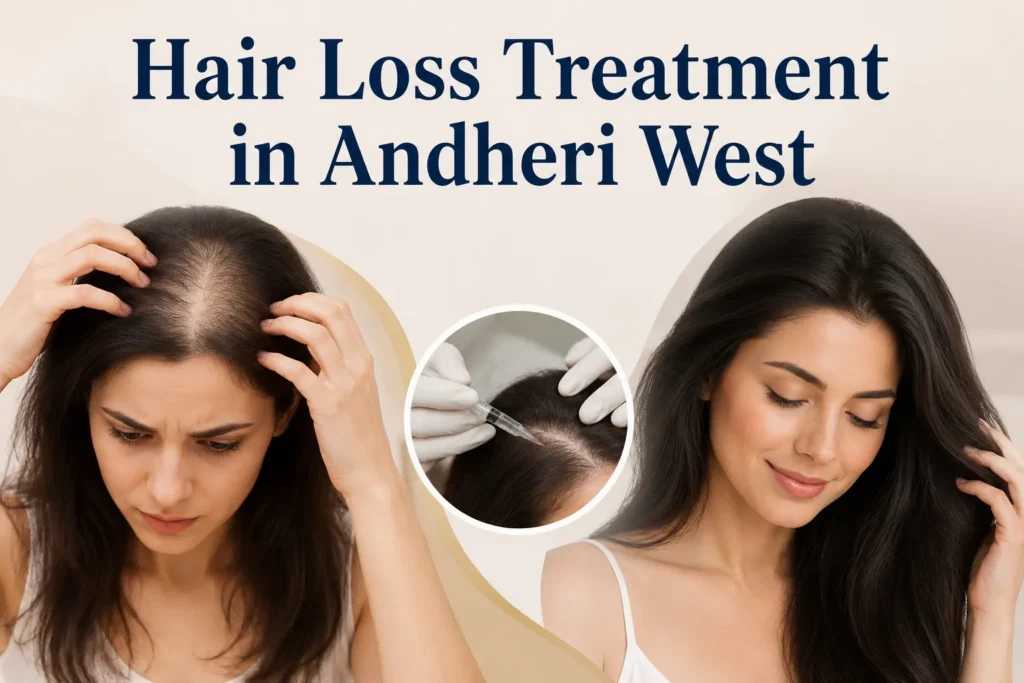
If you’ve typed “hair loss treatment for women near me” into Google late at night after noticing more strands on your pillow or in the shower drain, you’re not alone. Hair fall in women is one of the most common — and most under-discussed — dermatological concerns, and it’s completely reasonable to want answers from a clinic close to home rather than a random forum thread. At DermaCute, located in Andheri West, Mumbai, we see women of every age walk in with the same worry: “Is this normal, or is something wrong?” This guide walks you through why hair loss happens in women, how to tell the difference between normal shedding and a real problem, and what a dermatologist-led hair loss treatment actually looks like.
Is Your Hair Loss Normal, or a Cause for Concern?
Losing hair every day is not, by itself, a problem. Most people shed somewhere between 50 and 150 hairs daily as part of the natural growth cycle — old hairs fall out while new ones grow in to replace them. The trouble starts when that balance tips: more hair is falling out than is growing back, and over weeks or months you begin to notice visible thinning, a widening part, or patches.
Some signs that it’s time to stop guessing and see a specialist for hair loss treatment for women near me searches to turn into an actual appointment:
- Noticeably thinning hair at the crown or along the part line
- Clumps of hair in your brush, pillow, or shower drain
- A visibly wider parting compared to a year ago
- Patchy bald spots (which can appear suddenly)
- Hair that feels thinner in volume even if the length looks the same
- Scalp itching, tenderness, redness, or flaking alongside hair fall
If any of these sound familiar, it’s worth having a proper scalp assessment rather than trying to self-treat with random shampoos and supplements. Early diagnosis matters — hair follicles that are still active respond far better to treatment than ones that have been dormant for years.
Why Does Hair Loss Happen in Women? Common Causes
Hair loss in women rarely has a single, simple cause. It’s usually a combination of factors, which is exactly why a personalised consultation matters more than a generic fix. Here are the most common reasons we see at our clinic:
1. Female Pattern Hair Loss (Androgenetic Alopecia)
This is the most common cause of hair thinning in women and is largely genetic. Unlike male pattern baldness, it rarely causes a receding hairline — instead, women typically notice gradual, diffuse thinning at the crown and widening of the central part. It can begin any time after puberty but is most commonly noticed in your 30s, 40s, or after menopause.
2. Hormonal Changes
Pregnancy, childbirth, menopause, and conditions like PCOS (Polycystic Ovary Syndrome) or thyroid disorders can all disrupt the hormonal balance that keeps hair in its growth phase. Postpartum hair shedding, for instance, is extremely common a few months after delivery and is usually temporary — but it can still feel alarming.
3. Telogen Effluvium (Stress-Related Shedding)
A stressful event — physical illness, surgery, extreme emotional stress, sudden weight loss, or even a high fever — can push a large number of hair follicles into the “resting” phase at once. A few months later, this shows up as a sudden increase in shedding, even though the trigger has passed.
4. Nutritional Deficiencies
Low iron, vitamin D, biotin, protein, or zinc levels can all weaken the hair growth cycle. This is a particularly common and fixable cause of excessive hair fall in women, which is why blood work is often part of a proper diagnostic workup.
5. Scalp Conditions
Dandruff, seborrheic dermatitis, fungal infections, and product buildup can all irritate the scalp environment and contribute to hair fall and thinning if left untreated.
6. Styling and Traction Damage
Tight hairstyles, frequent heat styling, chemical treatments, and harsh brushing can cause traction alopecia — a type of hair loss caused by ongoing physical strain on the follicles.
Because so many of these causes overlap, self-diagnosing from Instagram reels or WhatsApp forwards can send you down the wrong treatment path entirely. A dermatologist can examine your scalp, take a detailed history, and — where needed — recommend basic blood tests to pinpoint what’s actually driving your hair fall.
Types of Hair Loss We Commonly Treat in Women
| Type | Typical Pattern | Common Trigger |
|---|---|---|
| Female Pattern Hair Loss | Diffuse thinning at crown, widening part | Genetics, hormones, age |
| Telogen Effluvium | Sudden, all-over increased shedding | Stress, illness, postpartum |
| Alopecia Areata | Sudden patchy bald spots | Autoimmune |
| Traction Alopecia | Thinning at hairline/temples | Tight hairstyles, styling habits |
| Dandruff-Related Hair Fall | Shedding with flaking, itching | Scalp buildup, fungal overgrowth |
Hair Loss Treatment for Women at DermaCute, Andheri West
Once we understand why your hair is falling, we build a plan around it — not a one-size-fits-all package. Our hair treatment in Andheri West menu includes:
Hair Fall Treatment — A specialised scalp serum with concentrated active ingredients delivered directly to weakened follicles, designed to strengthen roots and encourage thicker regrowth over a course of monthly sessions.
LLT – Low Level Laser Therapy — Our advanced laser hair growth device uses 51 emitting diodes combining LED and laser technology for full scalp coverage. The light energy stimulates follicle strength and is safe to repeat every two weeks, with each session taking around 25–30 minutes.
Tricho Balance Detox Therapy — An in-clinic and at-home therapy that nourishes and exfoliates the scalp, strengthens follicles, and improves hair volume and texture — ideal for women dealing with a combination of hair fall, dandruff, and dull-looking hair.
Anti-Dandruff Treatment — Using medical-grade shampoos and active ingredients like pyrithione zinc and ketoconazole, this addresses flaking and scalp buildup that can otherwise silently worsen hair fall.
Laser Comb Therapy — Another laser-based option for stimulating regrowth and improving overall scalp health, especially useful as a maintenance therapy alongside other treatments.
Most women see the best results from a combination approach — for example, Tricho Balance Detox alongside LLT sessions — rather than relying on a single treatment in isolation.
What to Expect at Your First Visit
If this is your first time researching hair loss treatment for women near me, here’s what a consultation at our Andheri West clinic typically involves:
- Detailed history — how long you’ve noticed hair fall, any recent stress, illness, pregnancy, or medication changes
- Scalp examination — checking hair density, pattern of loss, and scalp condition
- Diagnostic tests where needed — such as blood work to rule out iron deficiency or thyroid issues
- A personalised treatment plan — combining in-clinic therapies with home-care recommendations
- Follow-up tracking — since hair growth is gradual, we monitor progress over months, not days
Simple Habits That Support Any Treatment Plan
While in-clinic treatment addresses the root cause, these habits help protect results:
- Avoid very tight hairstyles and excessive heat styling
- Use a gentle, sulfate-light shampoo suited to your scalp type
- Eat a protein-rich diet with adequate iron and vitamins
- Manage stress where possible — it’s a genuine, measurable trigger for shedding
- Don’t skip follow-up visits — hair growth is slow, and consistency matters more than any single session
Why Choose DermaCute for Hair Loss Treatment in Andheri West
We’re based at Unit No 4B, Crystal Plaza Premises, E Wing, New Link Road, opposite Infinity Mall, Veera Desai Industrial Estate, Andheri West, Mumbai — easily accessible for women across Andheri, Versova, Lokhandwala, and the wider western suburbs looking for a hair specialist in Andheri West they can trust. Every treatment plan starts with an honest assessment of your scalp and hair — we don’t push treatments you don’t need, and we’re upfront about realistic timelines for regrowth.
Conclusion
Hair fall in women is common, treatable, and — most importantly — not something you need to figure out alone from search results and social media advice. Whether your hair loss is linked to hormones, stress, scalp health, or genetics, an accurate diagnosis is the real starting point for regrowth. If you’ve been searching for hair loss treatment for women near me, DermaCute’s Andheri West clinic offers a full range of dermatologist-guided options — from Tricho Balance Detox Therapy to Low Level Laser Therapy — built around what your scalp actually needs.
Book a consultation today.
Call us at +91-8268448149 or email enquiry@dermacute.in to schedule your hair and scalp assessment at our Andheri West clinic. You can also find us on Google Business Profile and Instagram for real client results and clinic updates.
FAQs
1. How do I know if my hair fall needs a dermatologist or is just normal shedding?
Losing 50–100 hairs a day is generally normal. If you’re noticing visible thinning, a widening part, bald patches, or shedding that’s clearly increased over a few weeks, it’s worth getting a scalp assessment rather than waiting it out.
2. Is hair loss treatment for women different from treatment for men?
Yes. While some therapies like low-level laser therapy overlap, the underlying causes in women — hormonal shifts, postpartum changes, PCOS, thyroid issues — are often different, so the diagnostic approach and treatment plan need to reflect that.
3. How many sessions of hair fall treatment will I need?
It varies by individual and cause, but most in-clinic therapies like our Hair Fall Treatment are recommended once a month for 3–4 months, with LLT sessions repeatable every two weeks. Your dermatologist will tailor this to your scalp’s response.
4. Can stress really cause hair loss?
Yes — this is called telogen effluvium, where a stressful event pushes a large number of follicles into a resting phase, causing noticeable shedding a few months later. It’s usually reversible once the underlying stress is addressed.
5. Will my hair loss treatment results be permanent?
Results depend on the cause of your hair loss and consistency of treatment. Conditions like female pattern hair loss are typically managed rather than “cured,” meaning ongoing maintenance therapy helps sustain results long-term.
6. Do I need blood tests before starting hair loss treatment?
Not always, but they’re often recommended, especially to rule out iron deficiency, thyroid dysfunction, or vitamin D deficiency, since these are common and treatable contributors to hair fall in women.
7. Is laser hair therapy safe for regular use?
Yes, low-level laser therapy is non-invasive and generally safe, with our sessions designed to be repeated every two weeks as part of an ongoing treatment plan.